SHAHEDNEWS: The Taj Mahal is a masterpiece of Mughal architecture and a global symbol of love and beauty. Designated as a UNESCO World Heritage Site in 1983, it attracts millions of visitors from around the world each year.
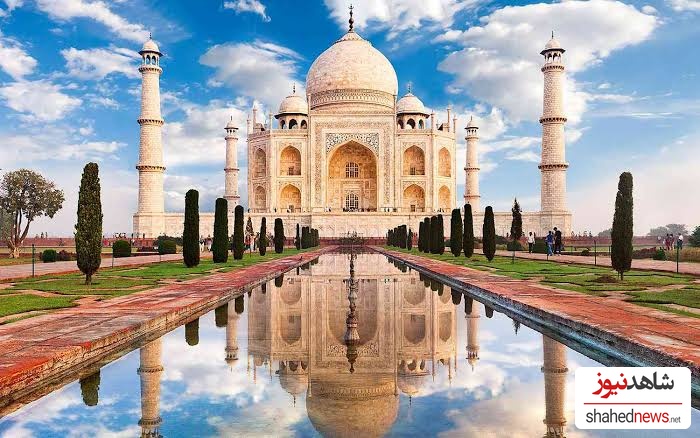
According to SHAHEDNEWS, The Taj Mahal is one of the most famous and recognizable monuments in the world. Located on the southern bank of the Yamuna River in Agra, Uttar Pradesh, India, it is an ivory-white marble mausoleum and a masterpiece of Mughal architecture. The monument was commissioned by the Mughal emperor Shah Jahan in memory of his beloved wife, Mumtaz Mahal, and has become internationally recognized as a symbol of love, beauty, and devotion.

Construction of the Taj Mahal began in 1632, following the death of Mumtaz Mahal in 1631, and the main mausoleum was substantially completed by 1648. The surrounding buildings, gardens, and other parts of the complex were completed several years later. The architectural design combines elements of Islamic, Persian, and Indian traditions, creating a highly symmetrical and harmonious complex. Ustad Ahmad Lahori is traditionally identified as the principal architect associated with the monument.
The Taj Mahal is much more than a single marble building. Its complex includes the main mausoleum, a large garden, a mosque, a guest house, a monumental gateway, minarets, and other structures. The main building is decorated with intricate floral and geometric designs, calligraphy, and inlaid precious and semi-precious stones. The combination of white marble, symmetry, gardens, domes, and decorative craftsmanship has made the Taj Mahal one of the greatest achievements of Indo-Islamic architecture.